Initial Thoughts on 3D printing Lutes
So far in my journey I have already attempted several Lutes with various levels of success, but I have yet to make one that I would count as a real triumph. All of these attempts are in immense gratitude to Grant Tomlinson’s scholarship of documenting surviving historical lutes housed at museums in Bologna, Paris, Brussels, Nurnberg, Vienna and London - with out his dedication and research none of this would be possible. I also have a debt of gratitude to the Lute Society of America for hosting Grant’s digital archive and establishing themselves as an important resource for lute makers and historians. Any readers with a serious interest in the lute should consider becoming a member today.
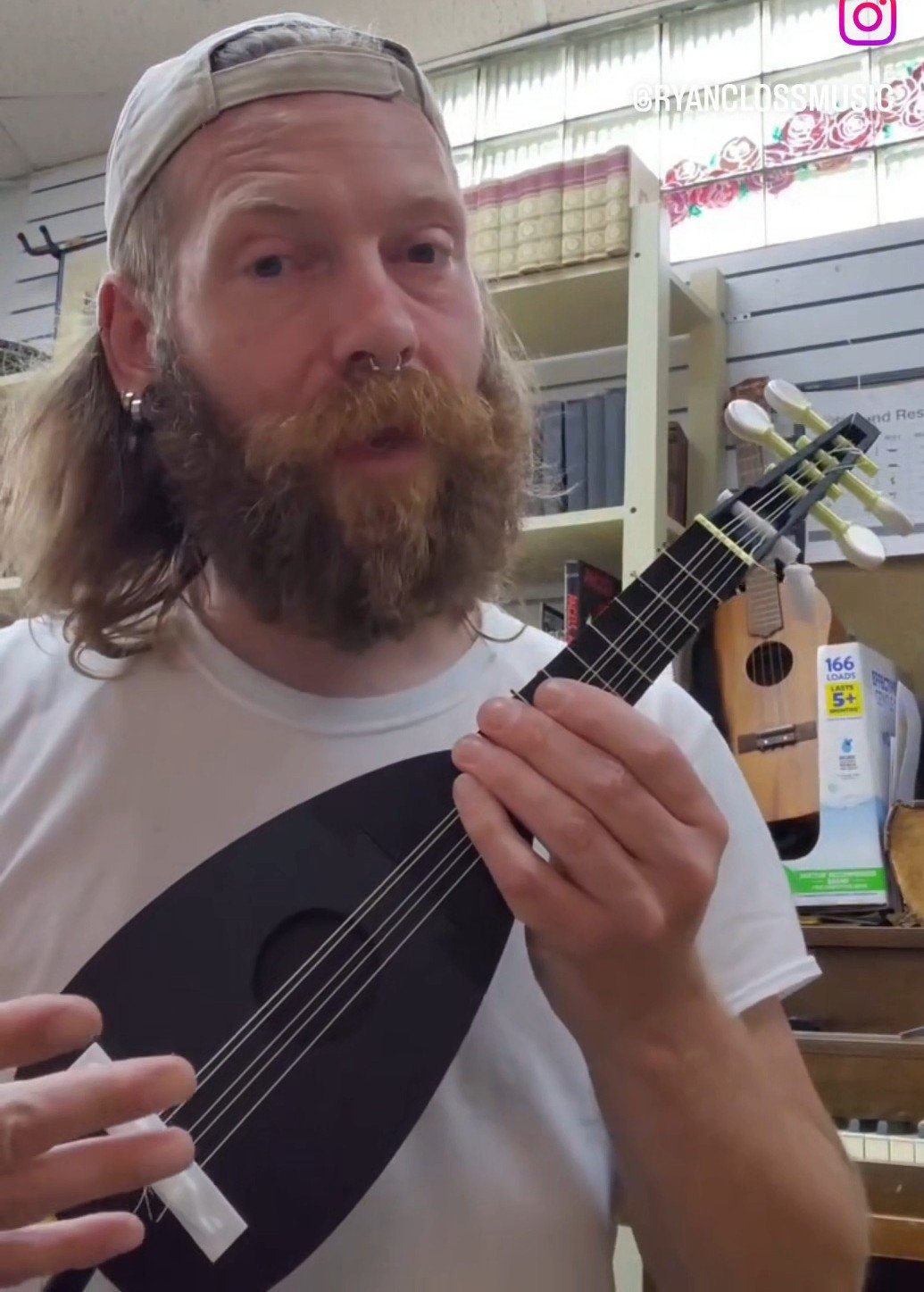
Almost successful
Venere C41 model - electrified
With Grants scholarship open on my laptop, I threw some reference blueprints into Blender to begin my 3D modeling. My 3D printer is a Bambu Lab P1S with a build plate area of 256 cubic mm so it was important to choose the right sized lute for this endeavor.
My first attempt was with Venere Lute 1 (1592) from Bologna measuring at 584 mm and here is what I learned from that experience:
Splitting the body into dovetailed parts isn’t a bad idea, and offers opportunities for later.
Having the neck as a separate part is definitely NOT strong enough to support string tension.
Pegs have a unique set of challenges in this medium that rival the overall construction process.
Bridge could be removable to allow access to electronics.
Bridge should also be shaped appropriately for electronics.
This model was a failure.
Some additional learning about electronics is needed to make this work.
My second attempt was after a few experiments of additional learning.
Venere C41 model is much better suited to 3D printing.
20 attempts at pegs is almost enough in this medium.
Piezo pickups work great for plastic instruments.
I should remember to include pilot holes for metal hardware.
Volume potentiometer will come later.
PLA material is not strong enough to support string tension.
Attempt 3&4
Venere C41 is staying, dovetail cut in half to mark the 12th fret spot.
Printed in PETG for stronger neck.
Printed in ABS for much stronger neck as well…
Results of this one are currently pending.
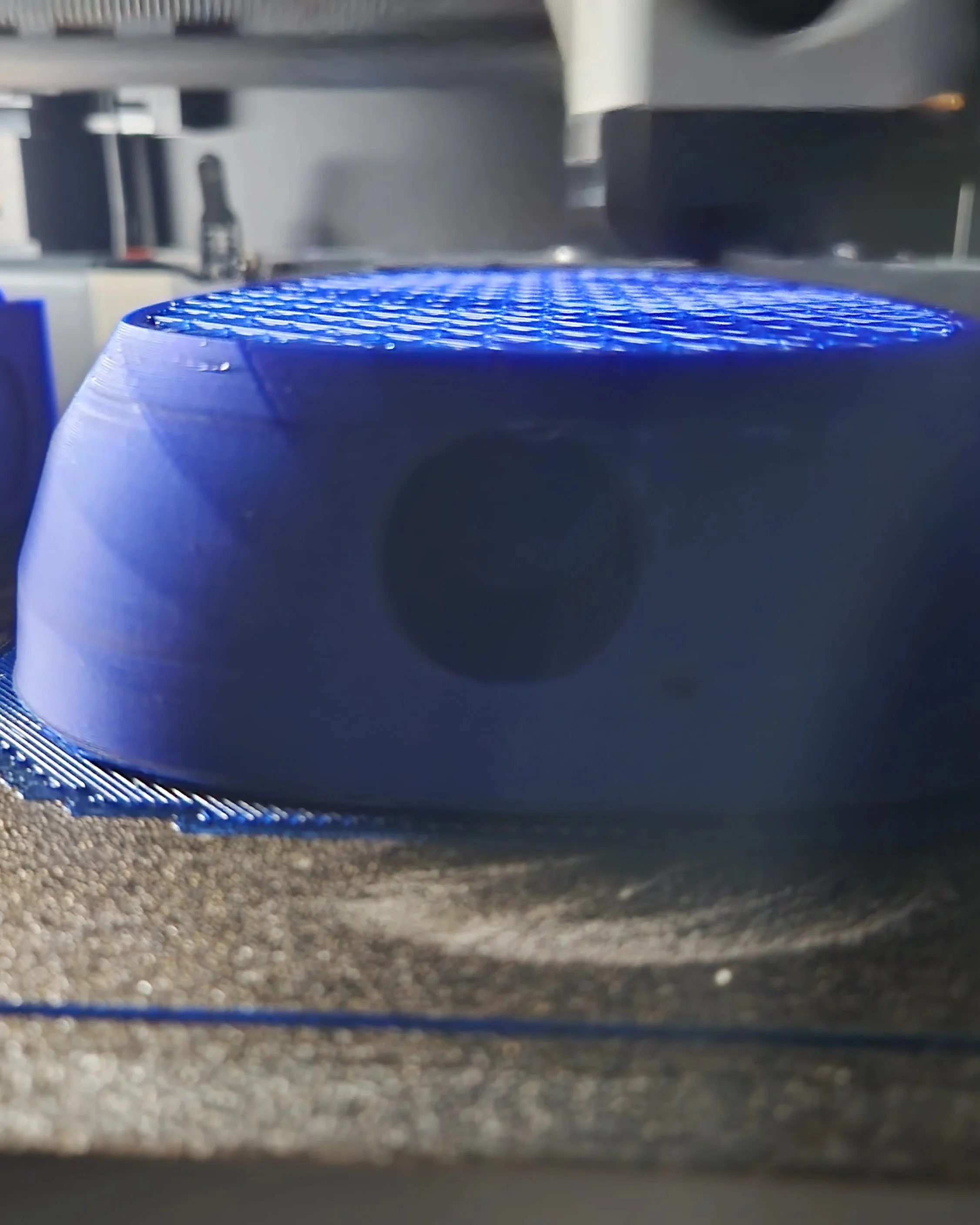
PETG Venere C41
Shot of the hole before the input jack